



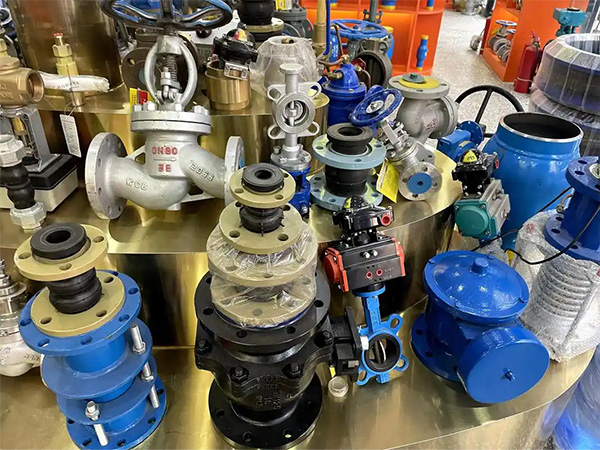
In the fluid piping system, the valve is the control element, its main role is to isolate the equipment and piping system, regulate the flow rate, prevent backflow, regulate and discharge pressure. Because it is very important to choose the most suitable valve for the pipeline system, it is important to understand the characteristics of the valve and the steps and basis for selecting the valve.
First, the characteristics of the valve
The use characteristics determine the main performance and scope of use of the valve, which belong to the valve use characteristics: the category of the valve (closed-circuit valve, regulating valve, safety valve, etc.); Product type (gate valve, globe valve, butterfly valve, ball valve, etc.); The material of the main parts of the valve (valve body, valve cover, valve stem, valve disc, sealing surface); Valve transmission mode, etc. The structural characteristics determine some structural characteristics of the valve installation, repair, maintenance and other methods, which belong to the structural characteristics: the structural length and overall height of the valve, and the connection form with the pipeline (flange connection, thread connection, clamp connection, external thread connection, welded end connection, etc.); The form of sealing surface (insert ring, thread ring, surfacing welding, spray welding, body body); Valve stem structure form (rotating rod, lifting rod), etc.
Second, valve selection steps
Clear the use of the valve in the equipment or device, determine the working conditions of the valve: applicable media, working pressure, working temperature, and so on.
② Determine the nominal diameter and connection mode of the pipe connected with the valve: flange, thread, welding, etc.
③ Determine the way to operate the valve: manual, electric, electromagnetic, pneumatic or hydraulic, electrical linkage or electro-hydraulic linkage.
④ According to the pipeline transmission medium, working pressure, working temperature to determine the selected valve shell and internal materials: gray cast iron, malleable cast iron, ductile cast iron, carbon steel, alloy steel, stainless acid-resistant steel, copper alloy, etc.
⑤ Select the type of valve: closed-circuit valve, regulating valve, safety valve, etc.
Determine the type of valve: gate valve, globe valve, ball valve, butterfly valve, throttle valve, safety valve, pressure reducing valve, steam trap, etc.
7 Determine the parameters of the valve: For automatic valves, determine the allowable flow resistance, discharge capacity, back pressure, etc., according to different needs, and then determine the nominal diameter of the pipeline and the diameter of the seat hole.
⑧ Determine the geometric parameters of the selected valve: structural length, flange connection form and size, the size of the valve height direction after opening and closing, the size and number of the connected bolt holes, and the overall valve appearance size.
⑨ Use the existing information: valve product catalog, valve product samples, etc., to select the appropriate valve products.
Third, the valve selection basis
① The use of the selected valve, working conditions and control mode.
② The nature of the working medium: working pressure, working temperature, corrosion performance, whether it contains solid particles, whether the medium is toxic, whether it is flammable, explosive medium, the viscosity of the medium and so on.
③ Requirements for valve fluid characteristics: flow resistance, discharge capacity, flow characteristics, sealing grade and so on.
(4) Installation size and overall size requirements: nominal diameter, connection with the pipe and connection size, overall size or weight restrictions.
Additional requirements for the reliability, service life and performance of electric devices of valve products. According to the above selection of valve basis and steps, reasonable and correct selection of valves must also be a detailed understanding of the internal structure of various types of valves, in order to be able to make the right choice of the preferred valve. The ultimate control of the pipe is the valve. The valve opening and closing parts control the flow pattern of the medium in the pipeline, and the shape of the valve channel enables the valve to have a certain flow characteristics, which must be taken into account when selecting the most suitable valve for installation in the pipeline system.
Four, the selection of valves should follow the principle
The valve for closing and opening media, the flow channel is a straight-through valve, its flow resistance is small, usually selected as the valve for closing and opening media. Downward closed valves (globe valves, plunger valves) are less used because of their tortuous flow channels and higher flow resistance than other valves. In cases where high flow resistance is allowed, closed valves can be selected.
Valves for flow control Valves that are easy to adjust flow are usually selected as flow control valves. Downward closing valves, such as globe valves, are suitable for this purpose because their seat size is proportional to the stroke of the closing member. Rotary valves (plug valves, butterfly valves, ball valves) and flex-body valves (clamp valves, diaphragm valves) can also be used for throttling control, but usually only in a limited range of valve calibers. Gate valve is a disc-shaped gate to the circular seat mouth to do cross-cutting movement, it can only be close to the closed position, in order to better control the flow, so it is usually not used for flow control.
Valve for reversing shunt This valve may have three or more channels depending on the need for reversing shunt. Plug and ball valves are more suitable for this purpose, so most valves used for reversing shunt use one of these valves. However, in some cases, other types of valves, as long as two or more valves are properly connected to each other, can also be used for reversing shunt.
Medium valve with suspended particles When the medium has suspended particles, it is best to use its closing parts along the sealing surface of the sliding valve with wiping action. If the closure is vertical in its back and forth motion against the seat, it may trap particles, so the valve is only suitable for a basically clean medium unless the sealing surface material allows embedding of particles. Ball valves and plug valves have a wiping effect on the sealing surface during opening and closing, so they are suitable for use in media with suspended particles.
At present, whether in petroleum, chemical, or pipeline systems in other industries, valve applications, operating frequencies and services are ever-changing, to control or eliminate even low leakage, the most important and critical equipment is the valve. The ultimate control of the pipeline is the valve, which is unique in its service and reliability in every field.
Add: No. 175, Lane 250, Fangde Road, Jiading District, Shanghai
Tel: +86-21-51863336
Fax: +86-21-34677003
E-mail: [email protected]
Fujian plant site:2233 Maosheng Road, Nan 'an City, Fujian Province
Factory telephone:+86-21-31007333

 Shanghai Public Network Anbei: 31011402004337Sitemap
 Home
Home Products
 Application
 Tel
Tel